Temperature stability beats everything
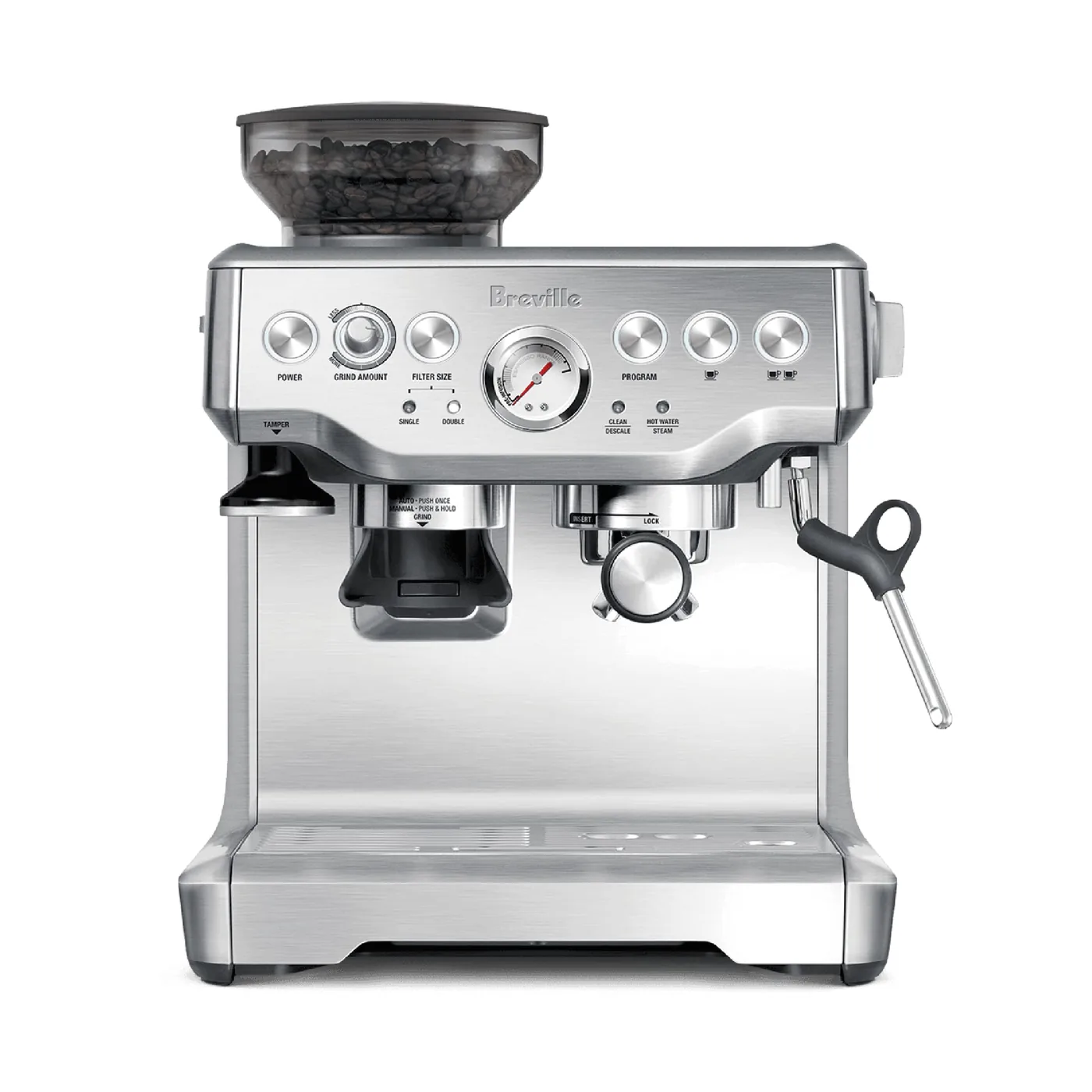
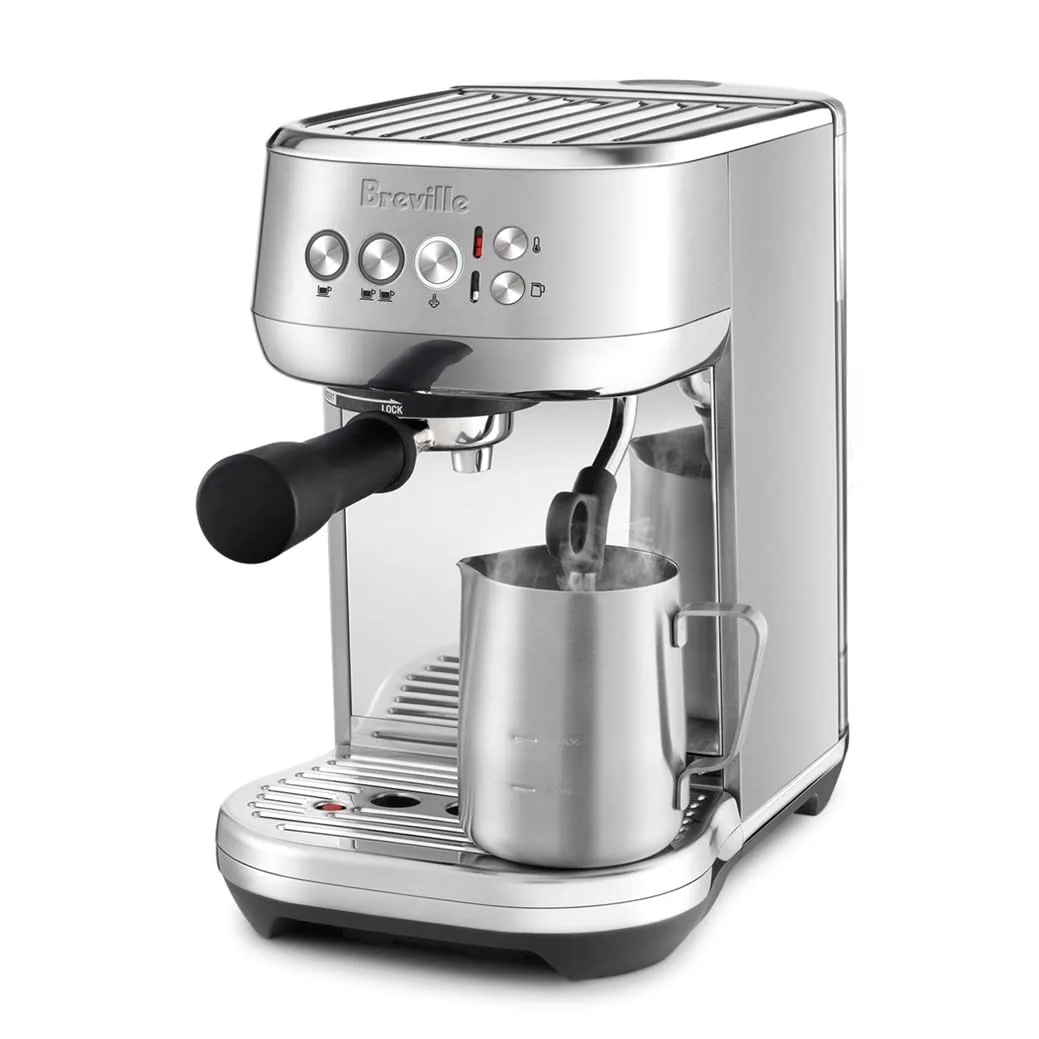
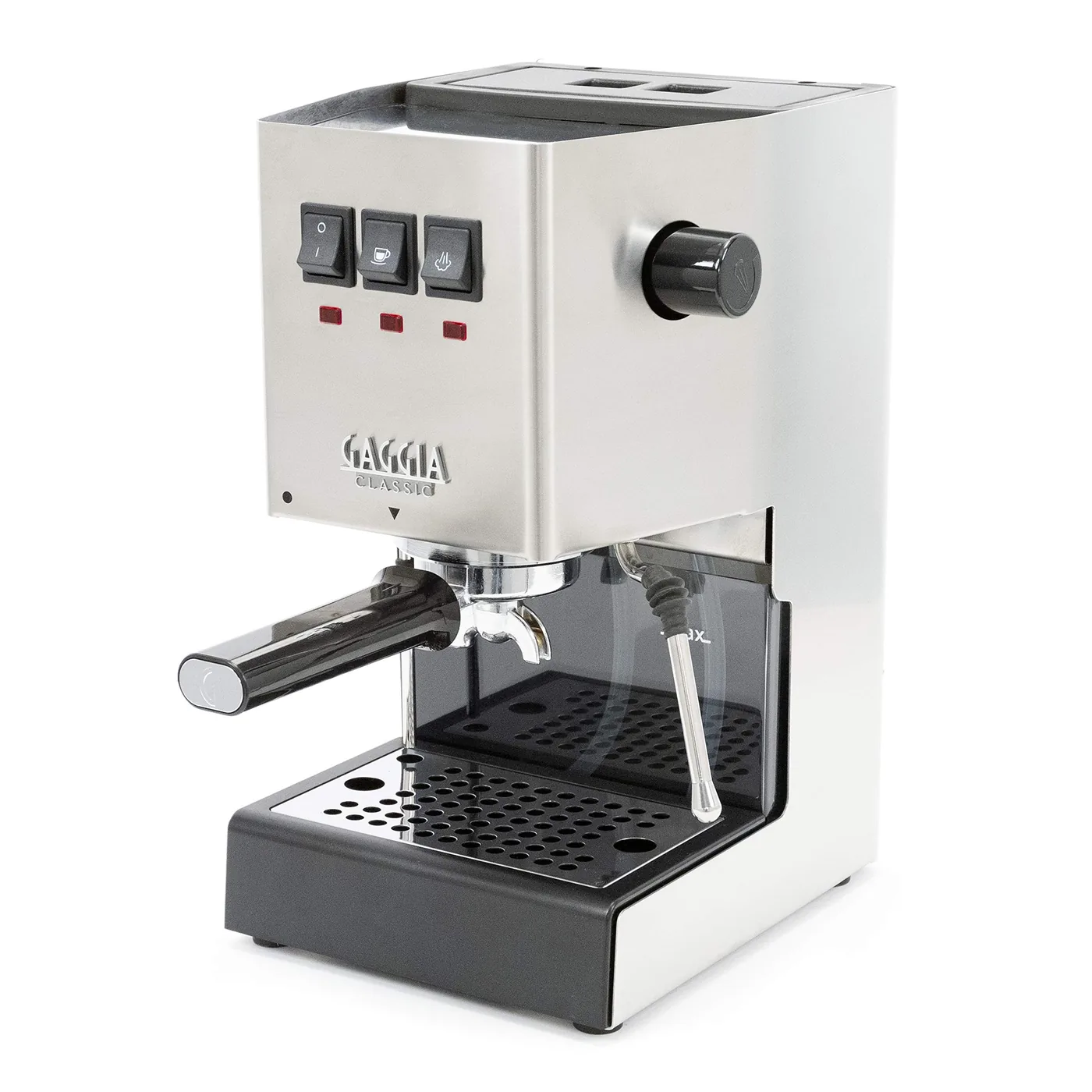
Espresso is brewed in a 4°F window. A machine that swings outside it produces a sour shot one morning and a bitter one the next from the same beans and the same grind, which is maddening because it feels like you are doing something wrong. PID control — a chip that actively regulates the heater instead of a thermostat that clicks on and off — is the single most valuable feature on a spec sheet. Both Brevilles have it. The Gaggia does not, which is why experienced owners fit an aftermarket PID kit.
The grinder decides more than the machine does
If you are choosing between two machines and one has a built-in burr grinder, the grinderless one is not cheaper — it is unfinished. A decent standalone burr grinder costs real money, and a cheap blade grinder will make an excellent machine produce bad coffee. Factor the grinder into the total before you compare prices.
Portafilter size is a long-term decision
58mm is the commercial standard. It means every precision basket, bottomless portafilter, puck screen and distribution tool on the market fits your machine. 54mm — what both Brevilles use — works perfectly well and has a decent aftermarket, just a smaller one. If you think you will end up tinkering, 58mm is the door that stays open.
Ignore the bar number on the box
Nearly every machine advertises 15 bar or 19 bar. Espresso extracts at about 9 bar at the puck, and well-designed machines regulate the pump down to it. A higher advertised number is a bigger pump, not better coffee.
Measure your counter before you order
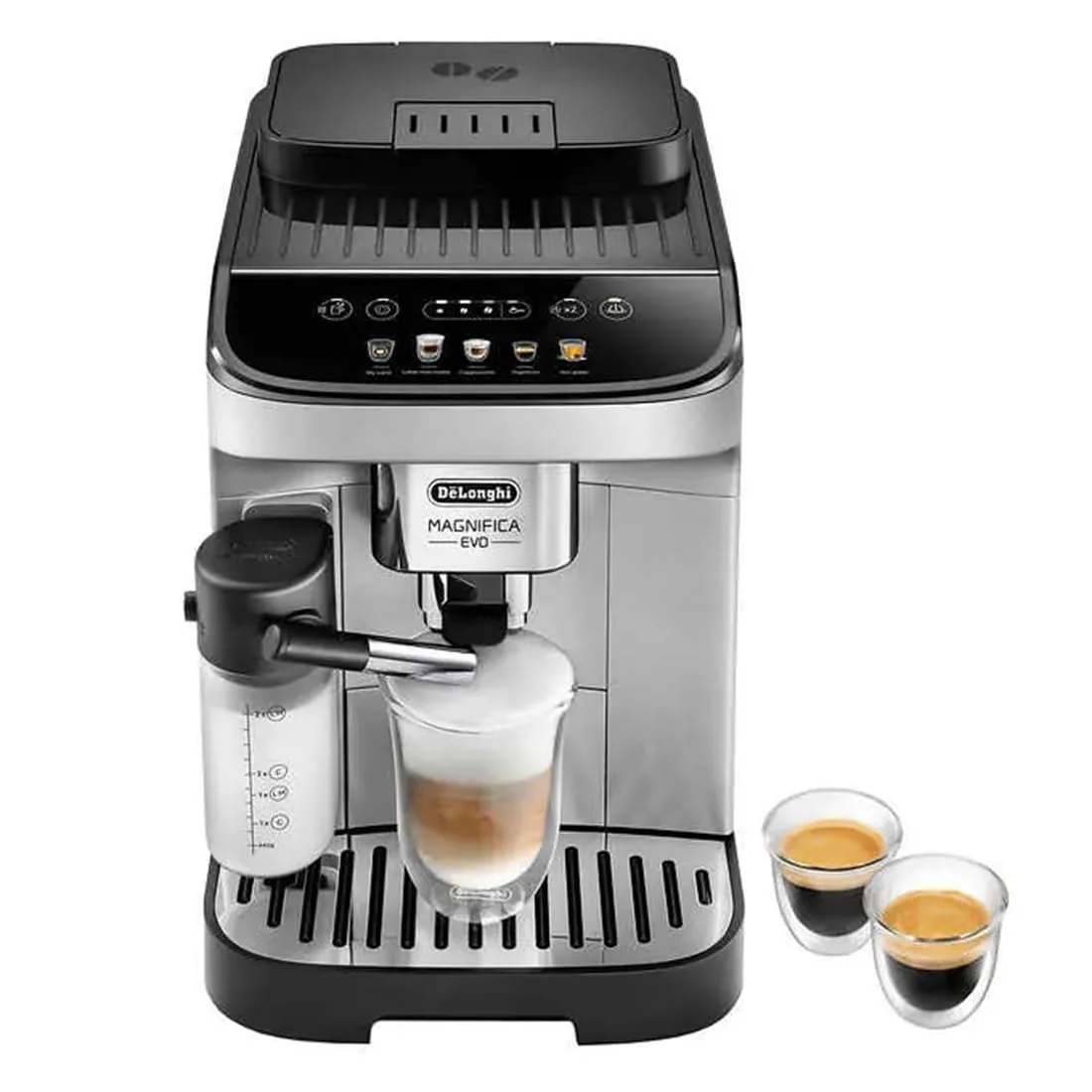
This sounds trivial and it is the most common regret. Super-automatics in particular are deep: the Magnifica Evo is 17.3 inches front to back, and standard wall cabinets sit 12 to 13 inches deep. Check the height with the lid open too, if the machine sits under a cabinet.